Retail space planning
CADS delivers accurate retail store design and space planning services to help manage and optimise layout and floor space across your retail stores.
Retail planning & space optimisation


Effective macro space planning improves store performance, maximises sales opportunities and optimises retail space. Learn how CADS helps retailers make informed decisions through expert retail planning, store data and floor plan services.
Scroll

Macro Space Planning plays an essential part of the retail space planning process.
The term macro space relates to your store layout, including the location of departments or categories within the store. It also encompasses their associated fixtures and the planograms attached to them.
This should not be confused with micro space, which relates to the mix and positioning of products within those planograms. Planners sometimes call these POGs
Ultimately, the process of optimising your store layouts for customer experience and sales performance is called Macro Space Planning.
To successfully plan retail space you need to get both your macro and micro space working together in harmony.
Isn’t getting the range and assortment right (the planogram part) more important? The answer is no. A successful macro plan makes it easy for your customers to find your products where they expect to find them.
By creating a great customer journey through your shop, you can deliver logical categories with sensible adjacencies. Comfortable aisle widths allow for uncrowded movement, while a considered ‘line of sight’ ensures customers can easily navigate the store.
Successful macro space planning helps shoppers quickly find what they are looking for, which ultimately encourages larger baskets and increases spend.

Physical constraints such as services, structural elements, and back-of-house requirements can make even the most carefully defined retail layouts difficult to implement.
Large columns, fire escape routes, ceiling heights and fixed service areas often affect how departments, fixtures and customer journeys can be positioned within a store.
CADS Surveys’ Matterport and as-built retail store surveys provide the accurate measurements planners need to account for these constraints and make more confident, executable layout decisions.
This is where experienced macro space planning becomes essential. Retail planners must balance commercial objectives, shopper flow and operational practicality. Store layouts need to work effectively in real-world retail environments and reflect changing UK shopper behaviour.
Getting the strategy right is only part of the challenge. Retailers also need the planning resource to apply changes accurately and consistently across individual stores and larger estates.
CADS can work alongside established in-house planning teams, take responsibility for specific programmes or provide ongoing retail planning support across an estate.


This is where CADS’ retail store and space planning expertise adds value. Our retail planners combine industry knowledge, practical experience and a deep understanding of store operations.
Macro space strategies and category requirements are translated into accurate AutoCAD floor plans, carefully optimised on paper for seamless and consistent implementation across the retail estate.
Supported by CADS Surveys’ precise measurements, these plans are fully deliverable in the physical store. This approach minimises risk, avoids costly rework, and maximises the commercial potential of every square metre.
Tools like StoreSpace® software, from CADS’ sister company StoreSpace Insights, further support this process by enabling planners to visualise layouts, manage planograms, and maintain consistency across the estate.
However, a tool alone cannot guarantee success – every store has its own unique constraints, which must be addressed through expert planning and accurate measurement.

Gaps in retail planning resource can delay store programmes, slow estate-wide change and increase pressure on internal teams.
CADS provides experienced, scalable planning resource without needing to increase headcount. We can strengthen existing teams, deliver specific programmes or provide an ongoing retail planning function across large store estates.
Talk to our team!
Established for over 40 years, CADS supports major UK retailers with store planning and estate-wide change programmes.
Our 54-person retail planning team provides the experience and capacity to support individual projects through to ongoing national programmes.
Our work with Waitrose, Asda and M&S demonstrates how CADS can provide retail planning resource at scale, supporting complex programmes across a large store estate.
Explore our Asda case studyOnce your store is open and trading, the aim of the macro planner is to manage space effectively and make adjustments as required. Rebalancing space ensures that category allocations align with buying choices and evolving customer trends, adapting the mix of category space to maximise performance.
Heat mapping is a key tool to fine-tune performance through the macro planning process. It can be used to help answer questions such as:
A floor plan provides visually engaging insight that spreadsheets alone cannot reveal when heat mapped. These insights allow planners to identify opportunities for improvement and test alternative layouts.
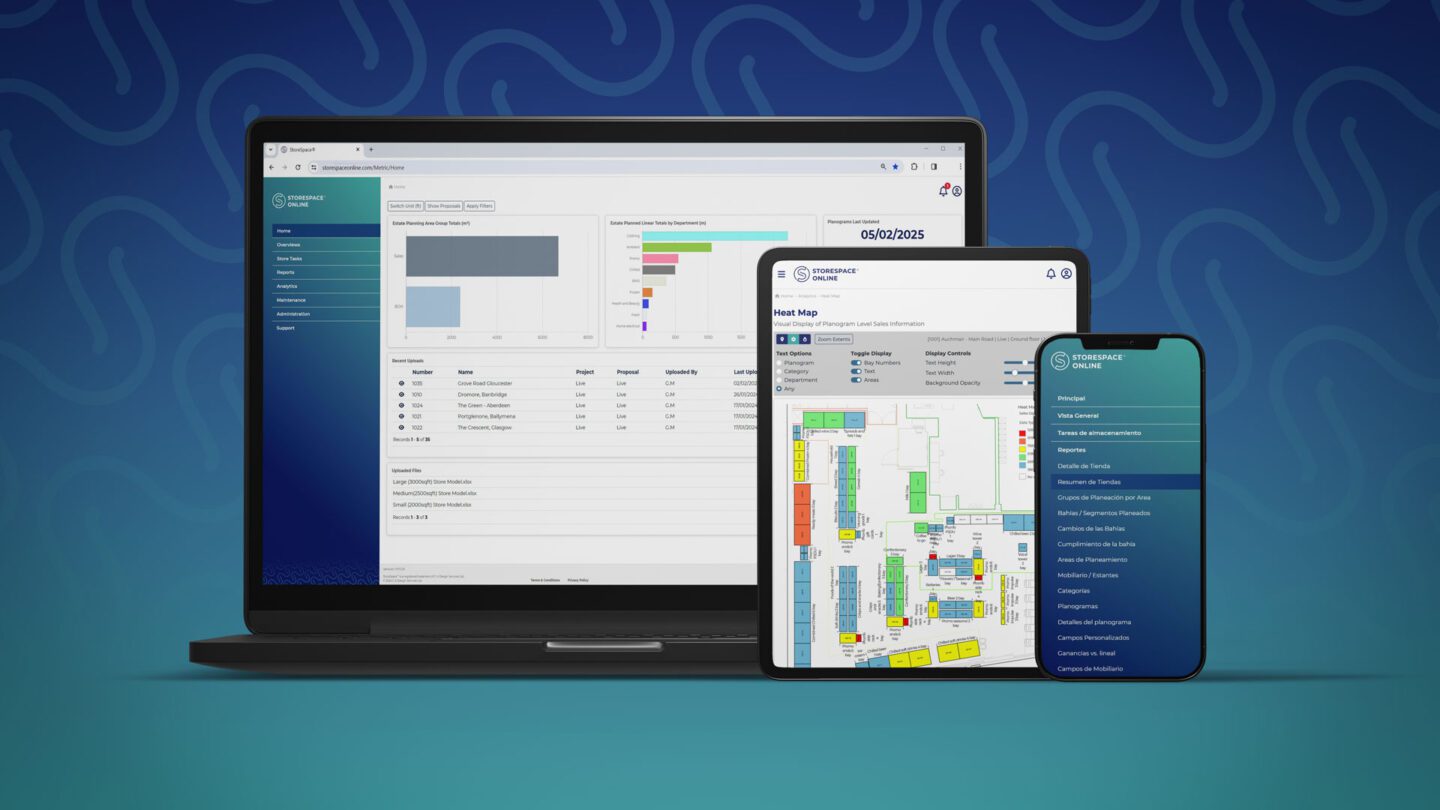
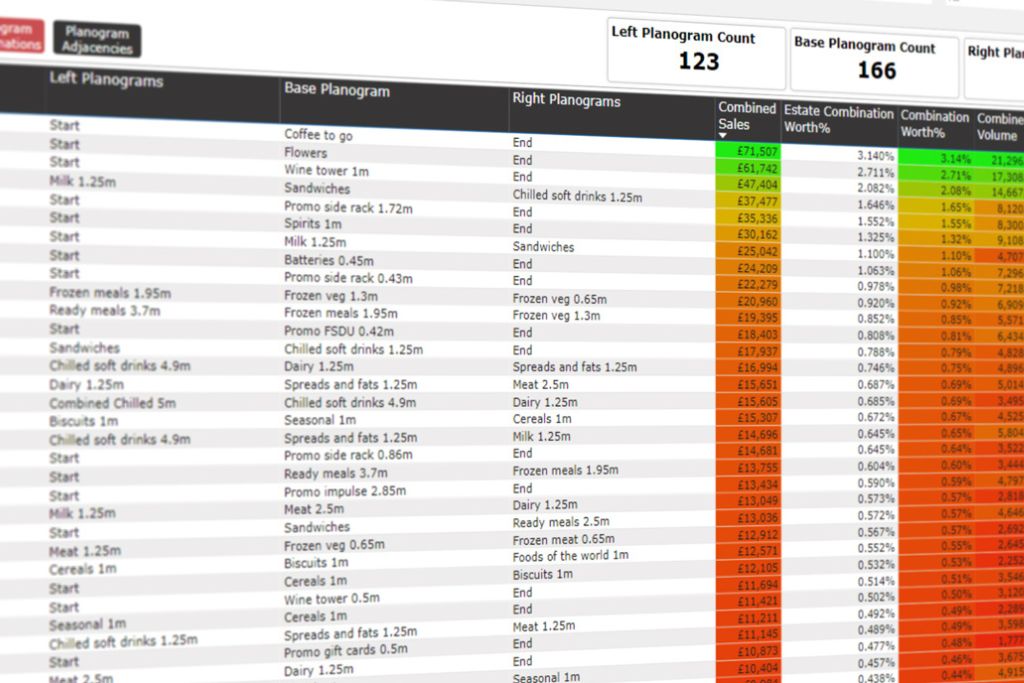
By comparing underperforming stores to high-performing ones, planners can explore changes such as moving a high-volume category to an adjacent position, where the halo effect may boost sales.
This continuous, data-driven approach ensures that store layouts remain optimised and responsive to shopper behaviour. Software is available to assist with this. For example, the StoreSpace Store Insights retail data analytics module includes features like adjacency reporting to help inform smarter layout decisions.
Effective macro space planning also helps retailers optimise secondary retail space, improve category positioning strategies and strengthen retail adjacencies across the wider store layout.
Macro space planning is essential to transform key retail areas into revenue-generating zones.
Communication between head office and the team in store is also an important part of the store planning process. Two-way communication between the team that plans your stores and the team responsible for implementing the plan at shelf level is vital.
A common reference point ensures change requests are captured effectively. This helps establish a culture of adherence and compliance across the team.
Successful retail space planning requires micro and macro space to work in harmony. This must happen within the physical constraints of the store. By analysing category sales and profit data of individual stores against the model or comparable stores within your estate, valuable lessons can be identified. These insights can then be applied to drive improvements across the network.


Macro space planning is essential to transform key retail areas into revenue-generating zones.
Aaron Wright, Managing Director at CADS
Read more about how CADS can transform your retail space and drive sales in our insight article ‘Maximising high-impact retail space in UK stores‘.
CADS helps retailers maximise high-impact retail space by creating expert store layouts. These layouts improve customer flow, category adjacencies, and product visibility.
By strategically designing layouts that make the most of every square metre, CADS enhances the shopper experience. This approach also drives sales and ensures operational efficiency across the store estate.
Our approach turns retail spaces into high-performing, revenue-generating environments that work seamlessly in practice.
There is no single resourcing model for retail space planning. Some retailers maintain established in-house planning teams, while others use external planning expertise for particular programmes or as part of their longer-term operating model.
CADS can work alongside existing retail teams or provide an ongoing outsourced planning resource, giving retailers access to experienced planners and scalable capacity as requirements change. This is particularly valuable across large estates where store plans need to be maintained and updated consistently.

Macro space planning is a continual process of optimising store layouts and ensuring the successful delivery of floor plans in-store. It also involves analysing resulting sales data to make sure your valuable and limited selling space is performing at its full potential.
Wider industry changes may also influence macro space planning decisions across retail estates. For example, sustainability initiatives and regulations such as Extended Producer Responsibility (EPR) are encouraging retailers and brands to rethink packaging formats, merchandising strategies and operational processes.
Over time, this may affect category positioning, secondary retail space allocation and wider store-layout strategies.
Working with CADS helps retailers bridge the gap between strategic planning and operational reality. We turn ambitious layouts into efficient, shopper-friendly stores that work in practice.
Contact us today to see how we can optimise your store layouts and maximise sales.
CADS macro space planning services

CADS delivers accurate retail store design and space planning services to help manage and optimise layout and floor space across your retail stores.
Retail planning & space optimisation
Fast, accurate retail as-built surveys using HD 3D laser scanning — trusted by store planners, merchandisers, architects, and property teams for fit-outs, layout planning, and estate audits.
Retail as-built surveys
Our sister company, retail design agency Prosper, provides the inspiration to turn your space into an engaging place and your store into an immersive shopping experience that will delight your customers.
Retail design

